Synopsis
Join Tiny Toot, Gato and Nisse on a new adventure!
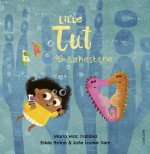
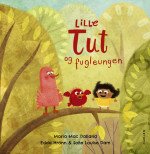
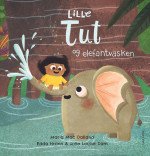
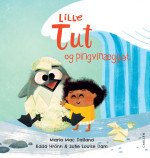
Tiny Toot is a little girl who lives with her big brother, Mum and Dad, and their cat, Gato. In Tiny Toot’s bedroom, Nisse lives in a mouse hole in the wall. Nisse has an “ecolocopter” — a flying walnut shell — and whenever he uses his magic to make Tiny Toot and Gato tiny, they can join him on adventures out into the world.
Tiny Toot, Gato and Nisse set off on an adventure in Nisse’s ecolocopter. They land in the middle of a field, where they meet a munching cow whose water trough is empty. Luckily, Tiny Toot is always ready to help! But Gato seems to have chosen a rather unfortunate spot — right underneath the cow’s tail …
The Tiny Toot universe is powered by curiosity and a sense of adventure, with plenty of warmth and a deep understanding of the very youngest children. Tiny Toot is also a TV series created by Maria Mac Dalland and produced by Morten Kaufmann for Toolbox Film, and is broadcast on DR Minisjang.
With illustrations by Maria Mac Dalland, Edda Hrönn and Sofie Louise Dam.
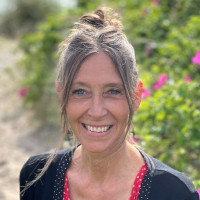
Personal note from the author
My intention is not to educate or include lessons in the series. On the contrary, I think we can learn from children in this age group. Two years old is the most beautiful age. They haven’t yet lost the connection to something that is bigger than themselves. Children that age still have an intuitive connection to feeling like part of nature, and not being disconnected from it. The most important thing we can do is to nurture this, and not to spoil it, and that’s really what we are trying to do in Lille Tut: tap into these experiences, and join children in celebrating life and nature.
One of the special things about the show is that it is aimed at the very youngest target group. There is a huge difference in how you communicate with this smallest group of children, from 1-3, than with 4-6 year olds. When I started on the project, I wasn’t really aware of how dramatic the differences were. I mean, I was aware; as a mother and a grandmother I know how special and unique this age group is. But I wasn’t really aware of how important that difference would be as a storyteller and a filmmaker. This target group requires a very different way of telling stories. They cannot necessarily link past events together to form a linear narrative, so every moment is a unique present moment. They also love repetition, because it allows them to recognize and anticipate, and makes them feel smart. It actually creates whole new possibilities as a storyteller, to explore a new way of communicating, which I find very interesting and exciting.